Client: Menteng Heritage Society
Role: Design Strategy, Visual Identity, Editorial & Communication Design
Context: Cultural Heritage · Urban Identity · Civic Engagement
Project Overview
This project involved the development of a visual identity and communication system for Menteng Heritage Society, an initiative dedicated to preserving and promoting the cultural and architectural heritage of Menteng—one of Jakarta’s historic urban districts.
The work explored how design can support heritage advocacy by translating history, place, and research into accessible and contemporary communication—without reducing heritage to nostalgia or decoration.
Context & Challenge
Urban heritage initiatives often face a dual challenge. On one hand, they must remain faithful to historical research and context; on the other, they need to engage contemporary audiences living in a rapidly changing urban environment.
Heritage communication risks being perceived as distant, elitist, or disconnected from everyday urban life. The challenge was to create a visual and editorial system that could honour historical depth while remaining open, relevant, and approachable.
Design Strategy & Approach
Designing with Place & Memory
The visual approach was informed by Menteng’s architectural language, urban layout, and historical layers—interpreted through structure, rhythm, and typography rather than literal ornamentation.
Editorial Thinking as Cultural Framework
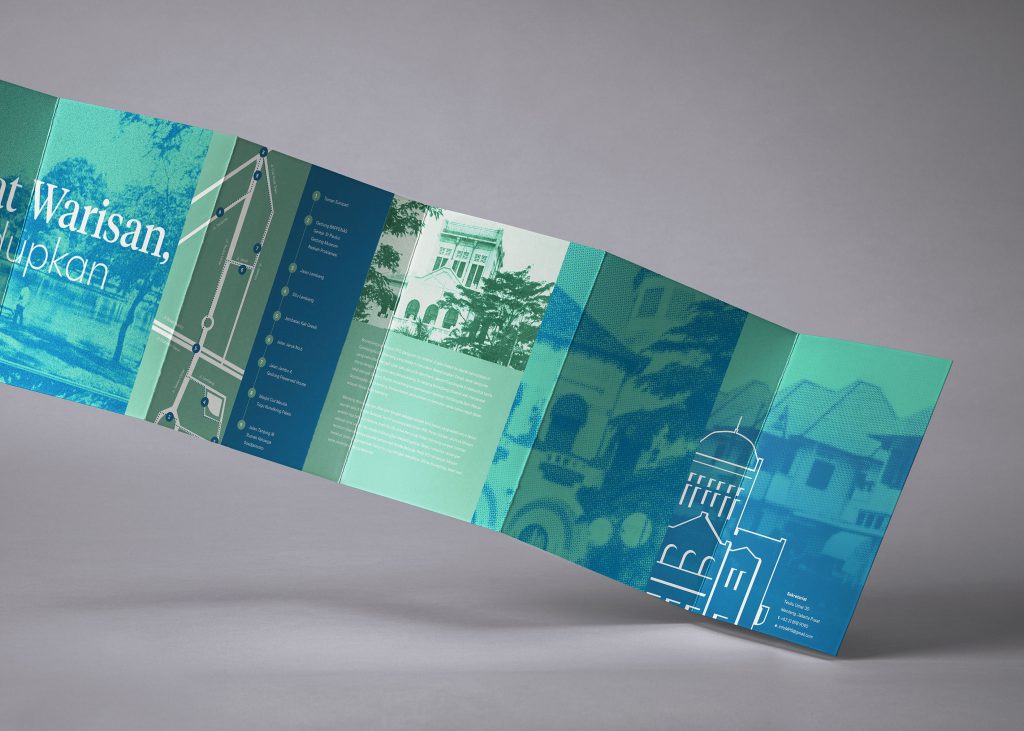
Instead of focusing on a logo-centric identity, the project prioritised editorial systems. Layout, hierarchy, and sequencing became primary tools to organise historical narratives, research materials, and public-facing communication.
Balancing Authority and Accessibility
The visual tone was designed to feel calm and credible, yet not institutional or closed—allowing heritage knowledge to be shared rather than guarded.
Role of Design
My role included developing the overall design strategy, shaping the visual identity, and designing editorial systems for publications and communication materials.
Design functioned as a mediator—bridging historical research, civic engagement, and contemporary communication practices.
Outputs
- Visual identity system
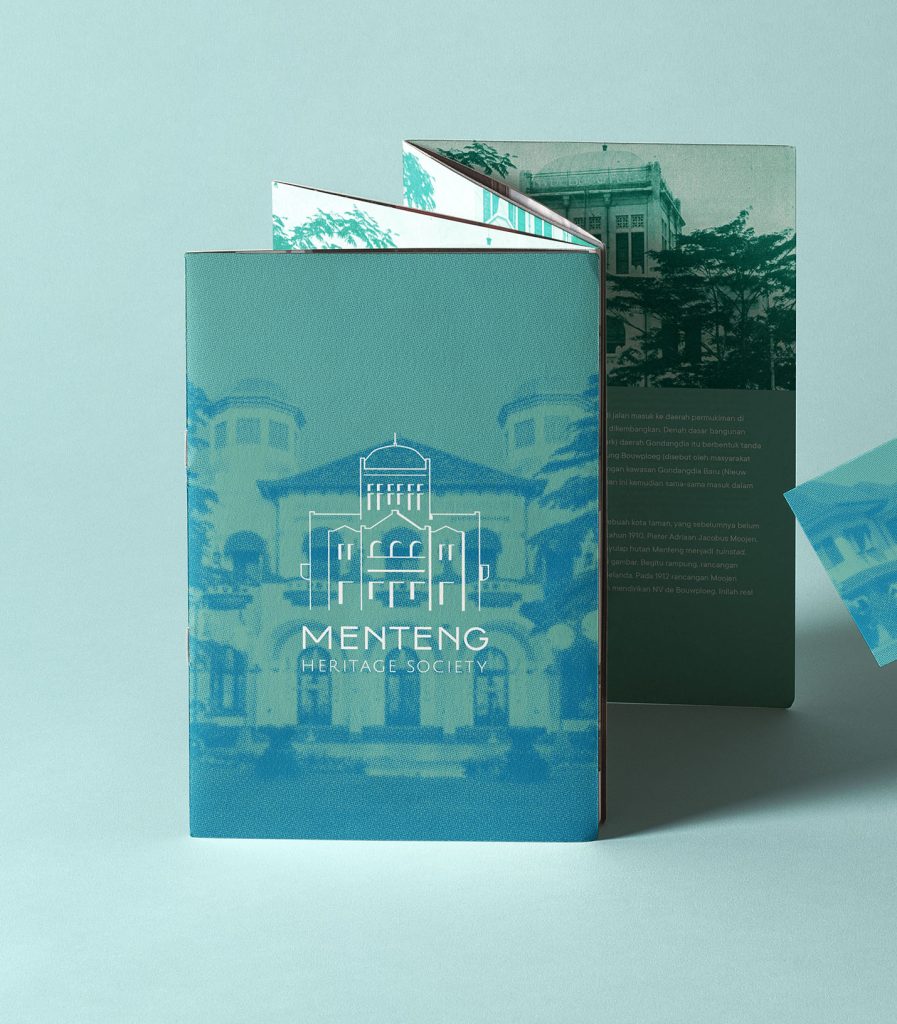
- Editorial layouts for publications and printed materials
- Communication assets for events and public engagement
- Visual tools supporting heritage education and outreach
Impact & Reflection
The project helped position Menteng Heritage Society as a credible and approachable cultural initiative—supporting dialogue around urban heritage, preservation, and civic identity.
More broadly, the work demonstrates how design can contribute to cultural sustainability, enabling history and memory to remain active within contemporary urban life.